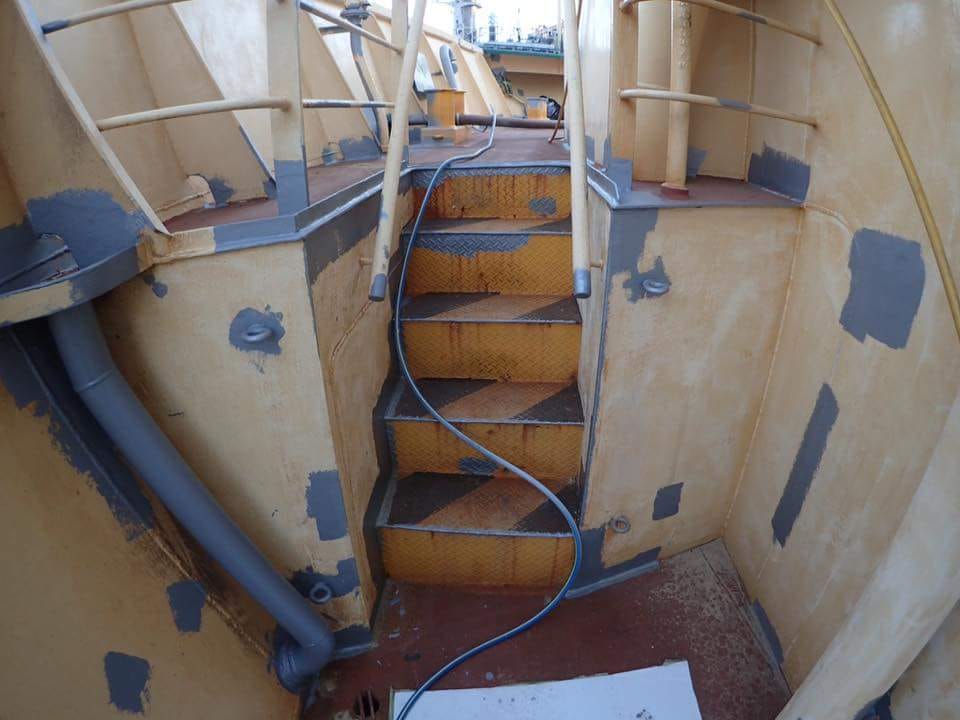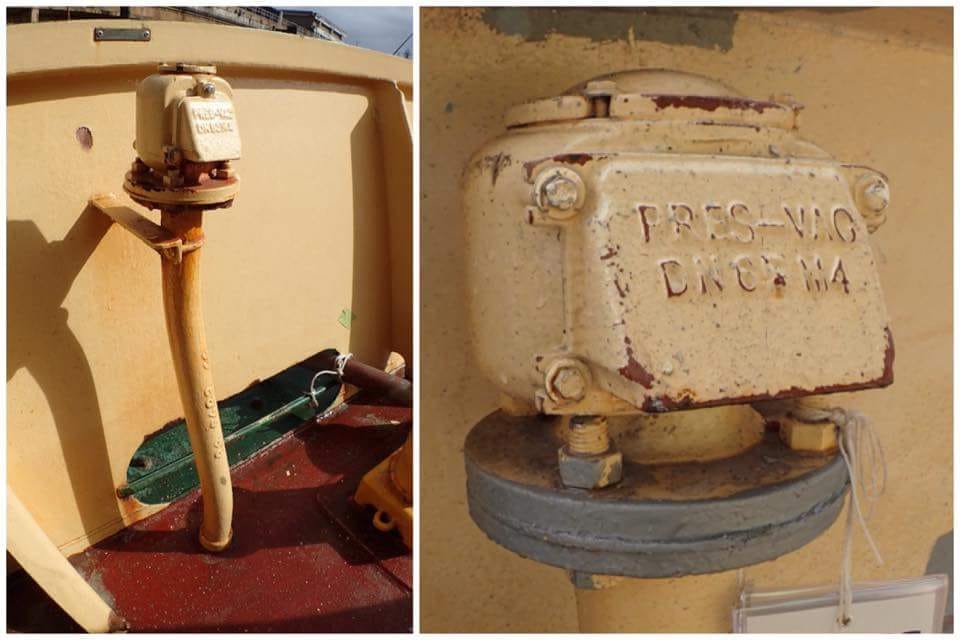
Tank vents. All four Freshwater Class ferries have them, as do all ships. Collaroy has internal tanks for all sorts of liquids - fresh water, lube oil, soluble oil for ballast, fuel oil, sullage, waste oil - the list goes on. All these internal tanks need to be free to breathe, and if you look around the ship you might see these - their ventilation points. This curious looking one is a ball-valve breather vent, and there are nine of them around the ship. In the Freshwater Class, only Collaroy has them. Why? A vent of this specific type (self-closing) was an original survey requirement for when Collaroy was in class as a seagoing passenger ship. As such, it is a vent which is designed, by environmental law specification, to prevent any of the tank's harmful-to-the-environment contents (such as fuel oil) from escaping upwards out of the tank in the unlikely event of the ship sinking. Reality bites here. The valve has an actual buoyant ball inside it, and should the vessel founder the ball will rise inside its housing and block the upward progress/escape of any liquid. A requirement, not an option. Remember, Collaroy was launched in 1988 as an ocean cruiser, and although she looks like the other three vessels in the class, she is full of plenty of feature$$ which were part of her original design compliance for that specific line of work. These days, she is reined into the local paddock, known to you and me as Sydney Harbour, but she still has all these functioning features built in. She still has nearly everything she needs to live out on the truly blue water again. 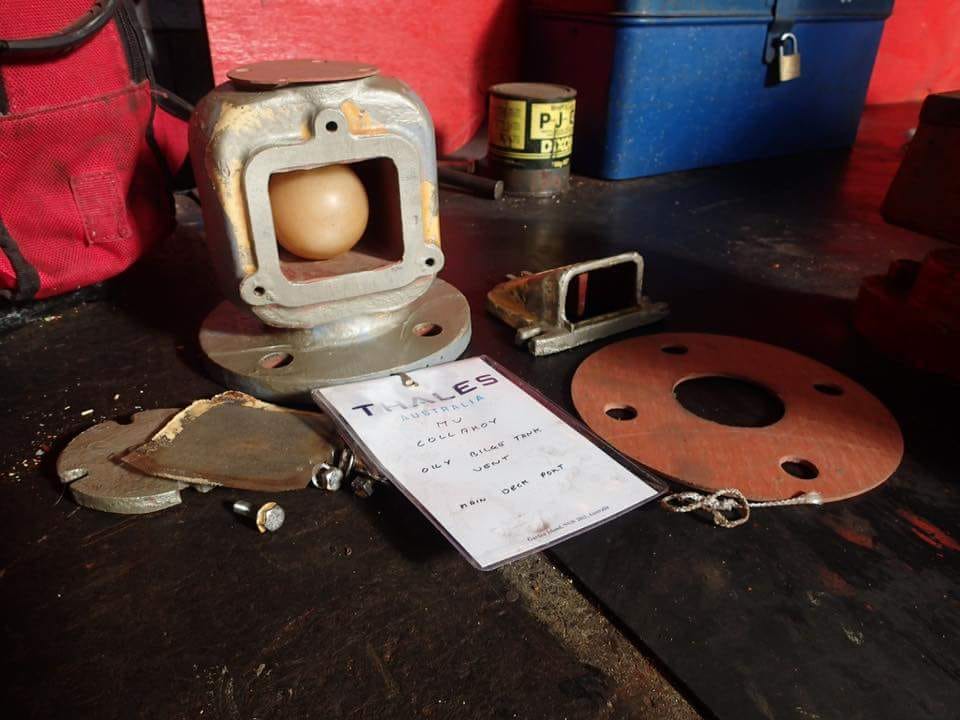
A ball valve breather vent, in pieces, being serviced by yard fitters. 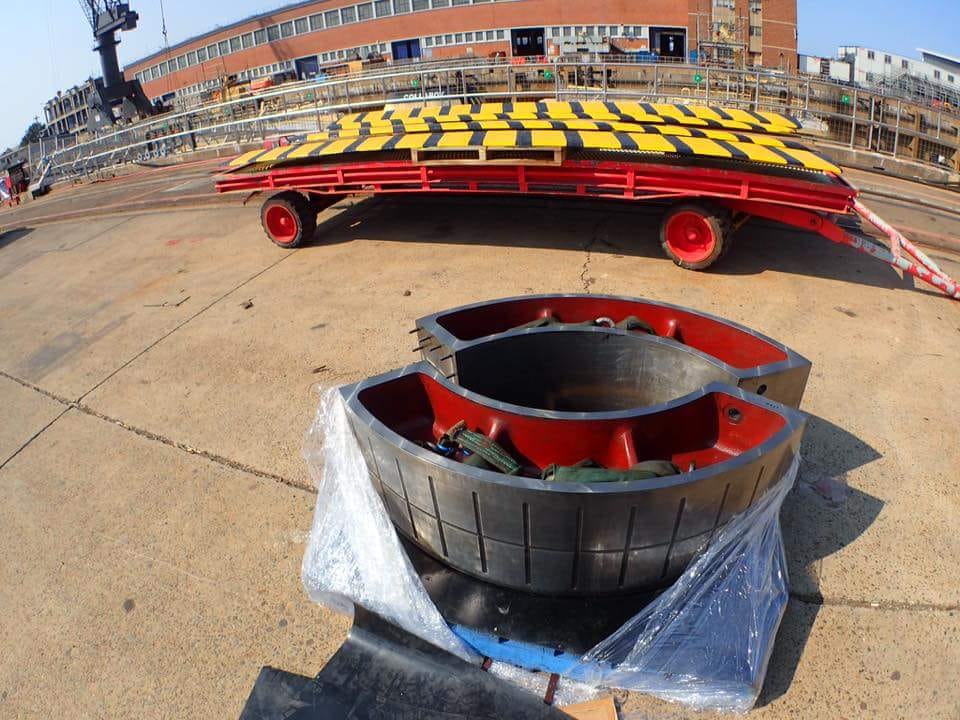
Newly machined. Both port and starboard pistons of Collaroy's forward rotary vein steering box have arrived dockside. Here, they join the crane queue, waiting for a lift down onto the ship. Sitting behind them, ahead in the queue, are all four of Collaroy's newly-modified and painted gangway transition strips: semi-fixed plates which pivot up and down on the heels of each of Collaroy's four passenger gangway ramps. 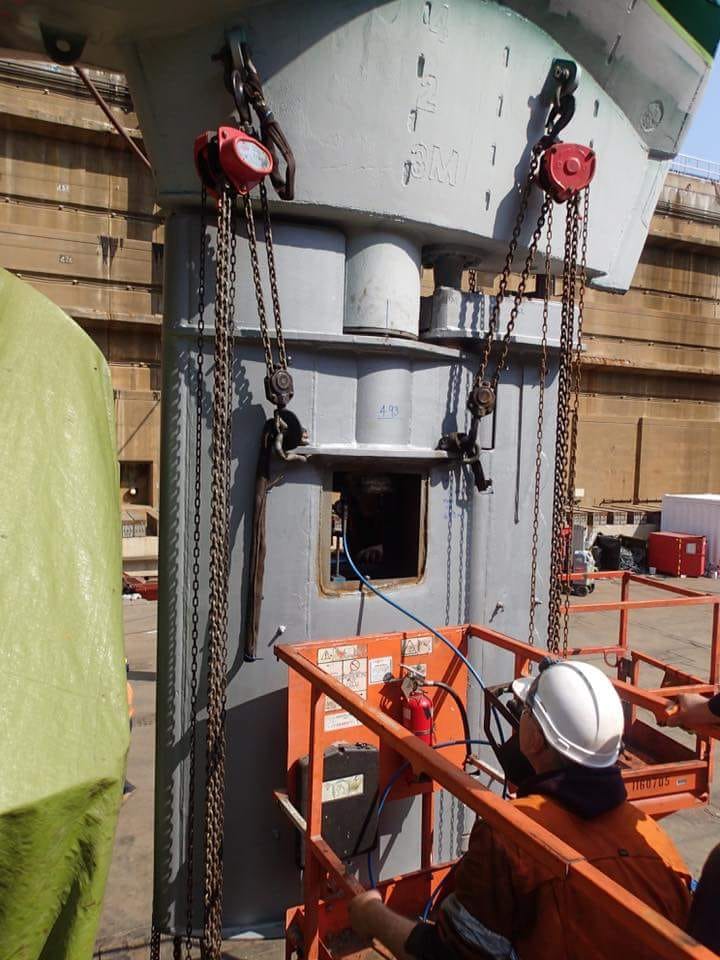
After riggers have lifted Collaroy's aft rudder blade up onto its taper, fitters move in to complete the connection by means of a hydraulic nut. First, the unique nut is wound on a minimum of 80% of the way up. Then, the amazing hydraulic mechanism built into the nut's upward face - known as an annular piston - is hydraulically jacked upwards (seen here) using the foothold provided by the affixed nut. This forces the rudder blade upwards onto its perfectly-mated taper, essentially fusing the two together by means of brute hydraulic force. Having studied the spec sheets of the rudder blade, fitters know exactly how far upwards the piston must advance off of the nut for the blade to be irrefutably fully home on its taper, in this case 4.93mm. In this way, the connection is actually made and confirmed by hydraulic force, then the piston is released and the nut is nipped up the remaining 20% to seal the deal. 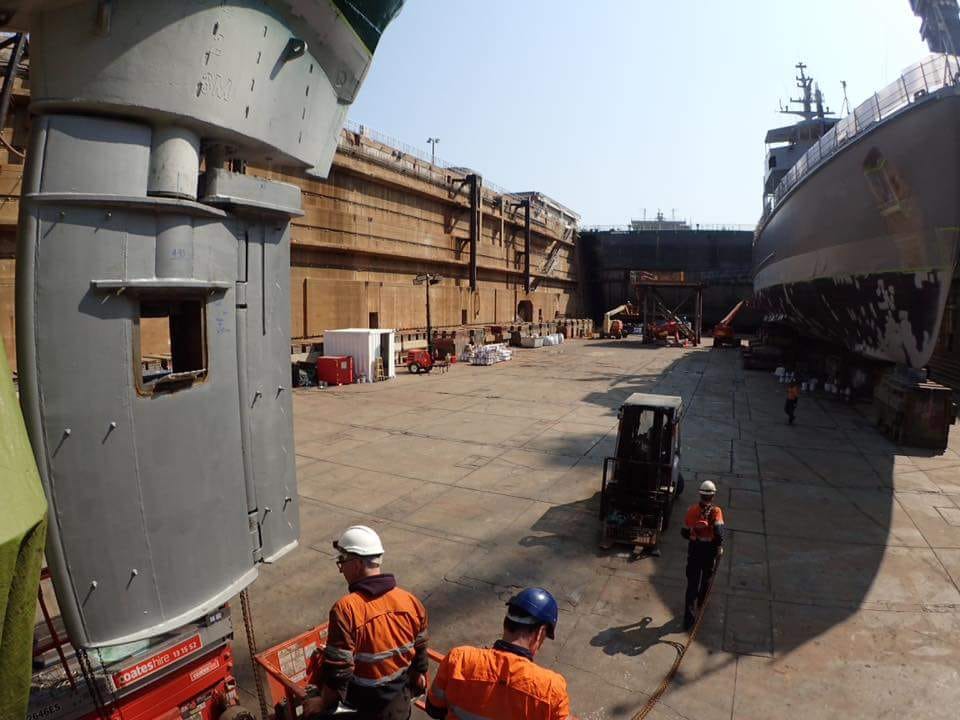
Collaroy's aft rudder is now fully joined together. Fitters quickly descend down on scissor lift and prepare to mask up the area as painters are waiting, literally with spray guns in hands, to begin applying black anti-foul coating to the hull. After the rudder is fully tested, the covers will be welded back on to the blade faces on both sides before painting is fully complete. 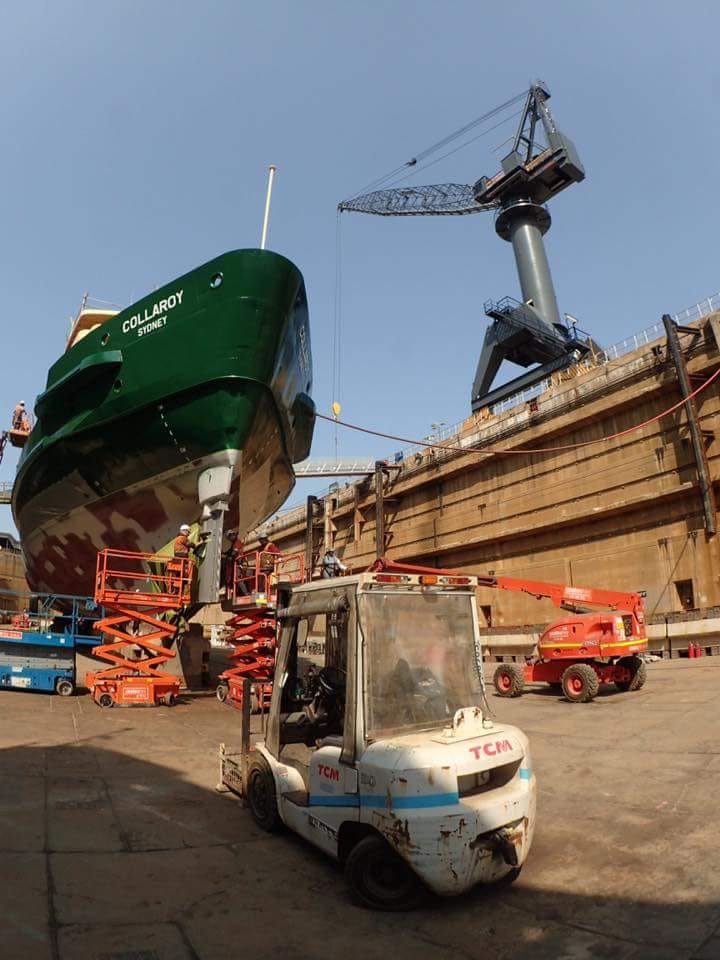
Steering gear nearly fully reassembled, fitters move in to mask up Collaroy's aft end before painters begin a three-hour anti-foul session, during which the dock floor will be off-limits. 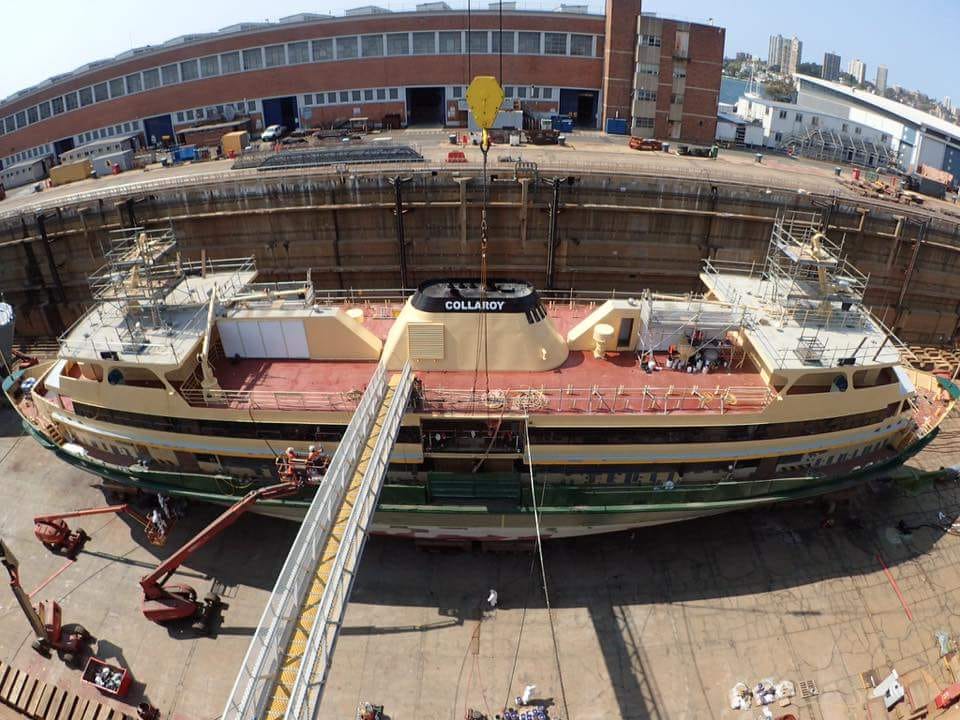
Collaroy, with less than a week to go on the blocks. Only when the crane is exactly at midships can we get this shot. 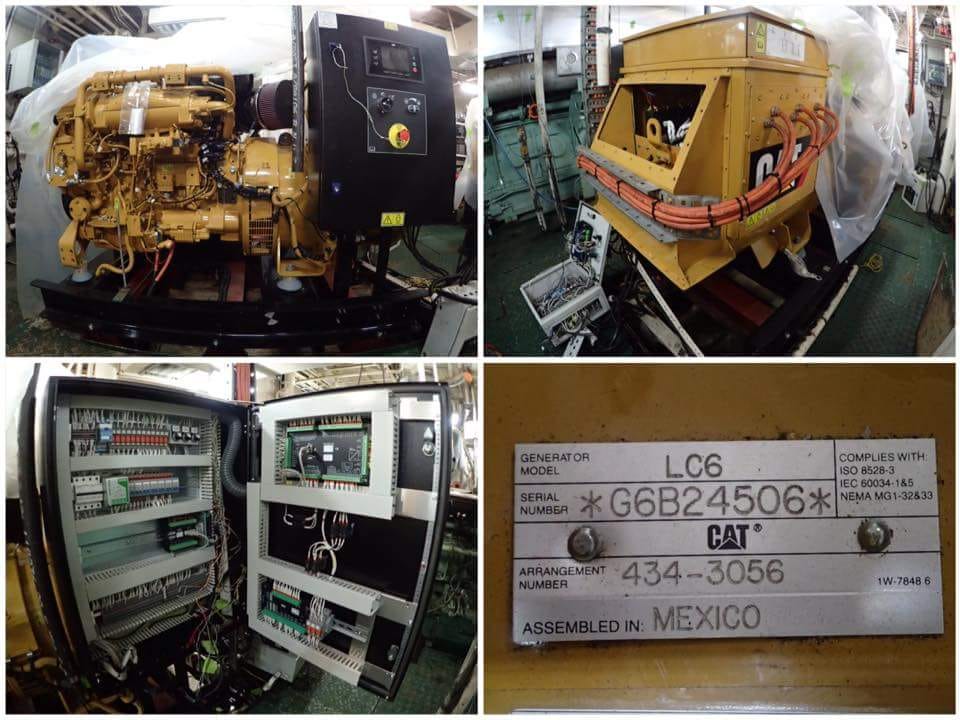
Meanwhile, down in Collaroy's engine room, three brand new CAT C9.3 200kw diesel generators, manufactured only 6 months ago in Mexico, are being connected up readied for service. The old generators had been well overdue for replacement. The new units, designed for a service life of 25,000 hours, should last 13-15 years 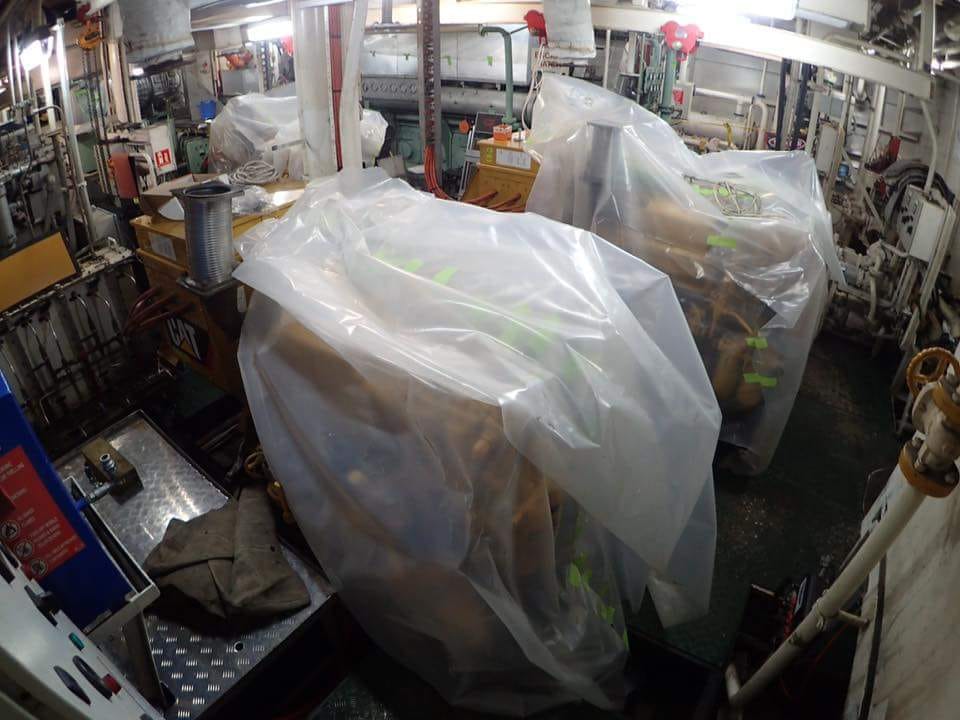
Shrouded in plastic covering, Collaroy's three new generators will be unveiled and flashed up by next week. 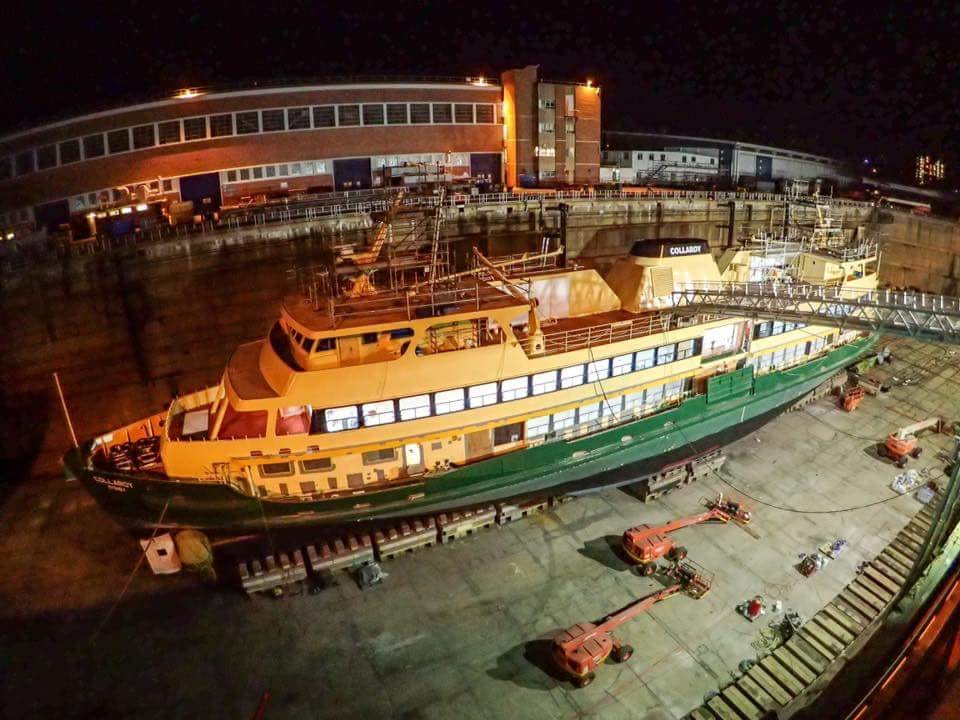
Collaroy in the dock, well before daybreak. Four cherry pickers alongside below her, come the daylight hours, will circulate around the hull with spray-gunning painters in their gondolas, applying final coats of preservative. 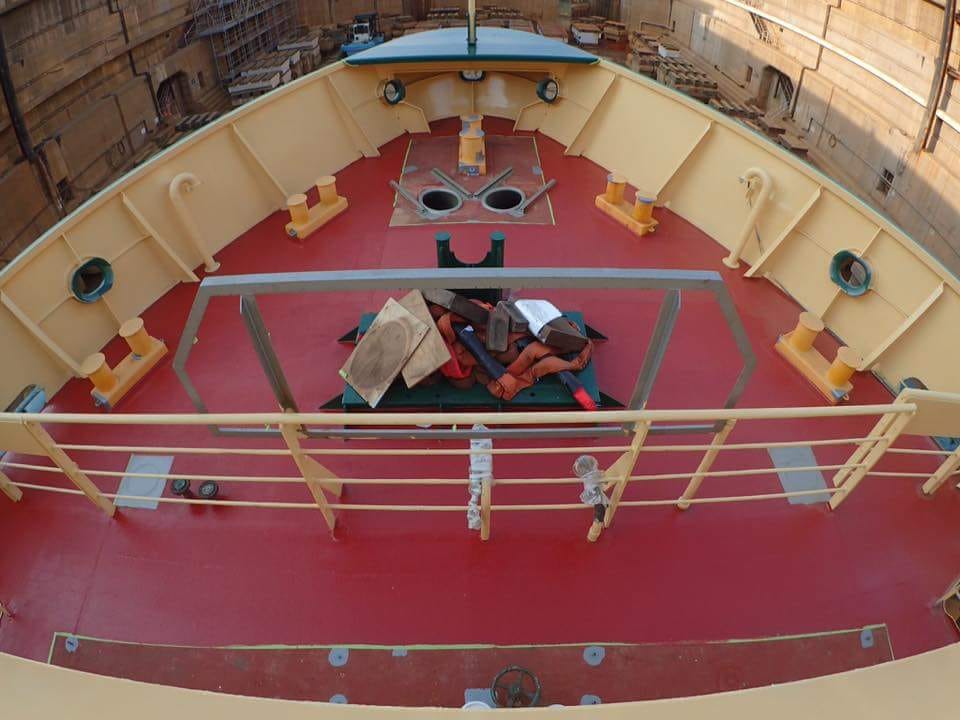
Collaroy's anchor pen has been modified slightly to allow crews to more easily work within its confines in emergency situations. Gates now have greater swing and awkward ventilation piping has been shifted clear of critical work areas. The braking capacity of the windlass, not yet back on the ship, has been upgraded with drums being machined back up close to their as-new specs. 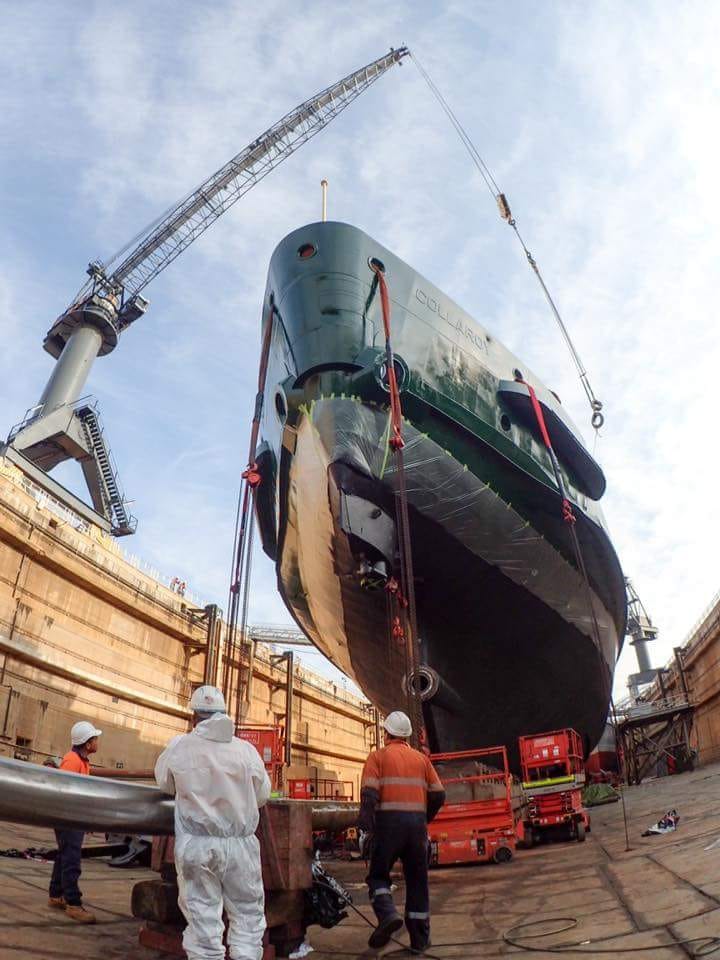
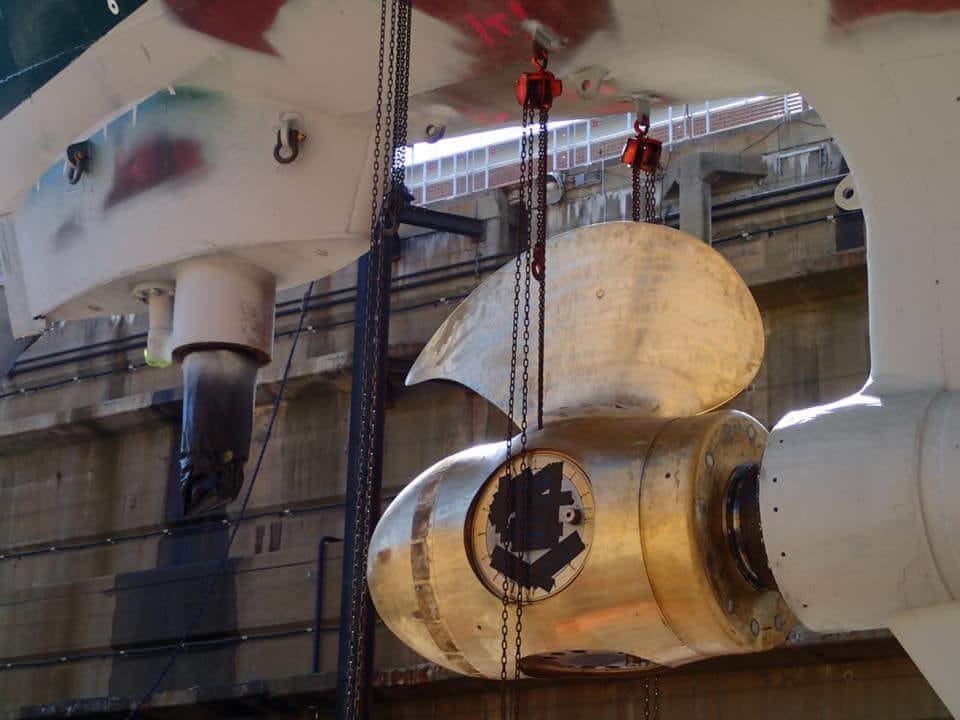
Fitters on the dock floor prepare Collaroy's forward propellor shaft for it's return into the ship. Overhead, crane crews lower the shaft's internal stern tube seal onto Collaroy's outside deck, and from there it will be walked down into the internal void space where the incoming shaft will be passed through it at the internal breach of the forward stern tube. 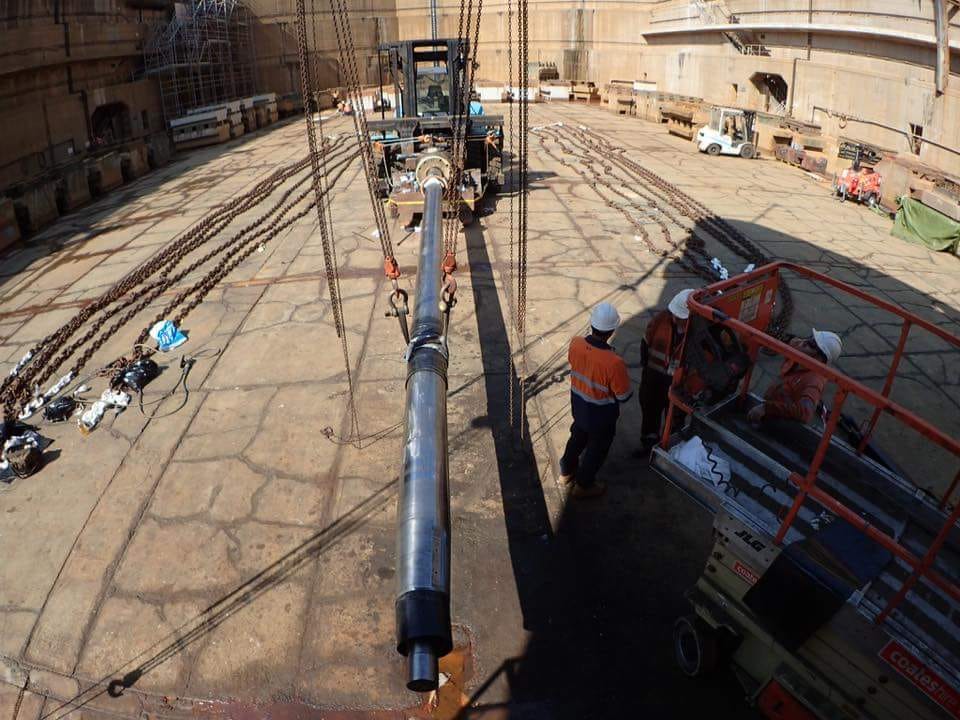
Collaroy's forward propellor shaft, ready to begin it's journey home. Notice, in the ship's shadow, the curtains of chain coming down from hull-eye-suspended chain blocks - in place and waiting to take the weight of the shaft when the forklift's armchair cradle relinquishes its hold. 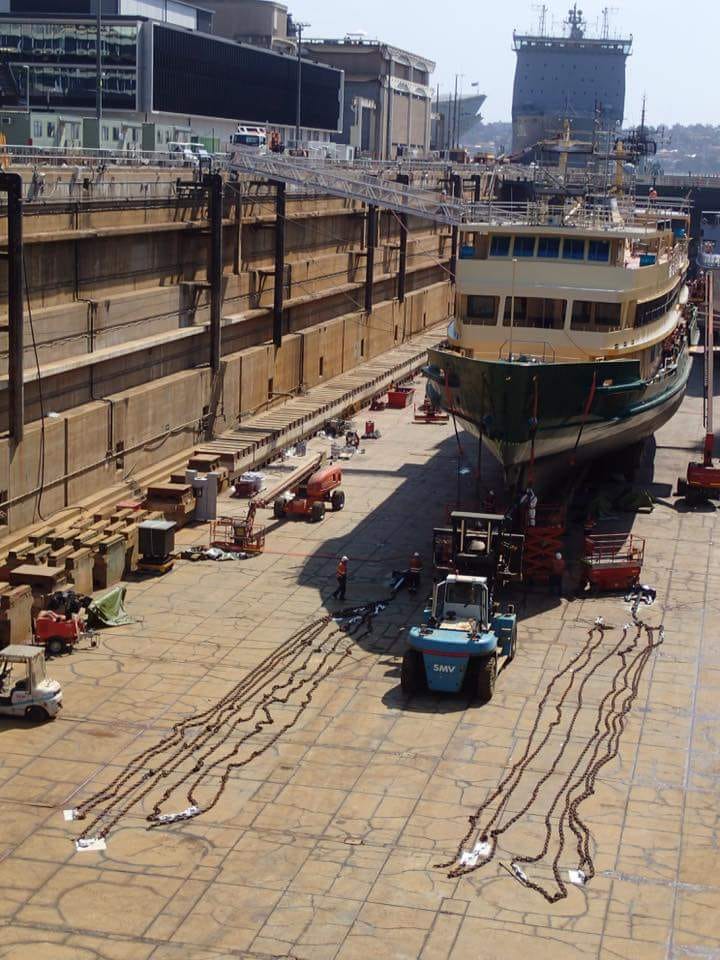
Approaching noon, on a hot spring day, the operation to return Collaroy's forward shaft onto the ship is but one of the many jobs underway on the many different ships in this yard. 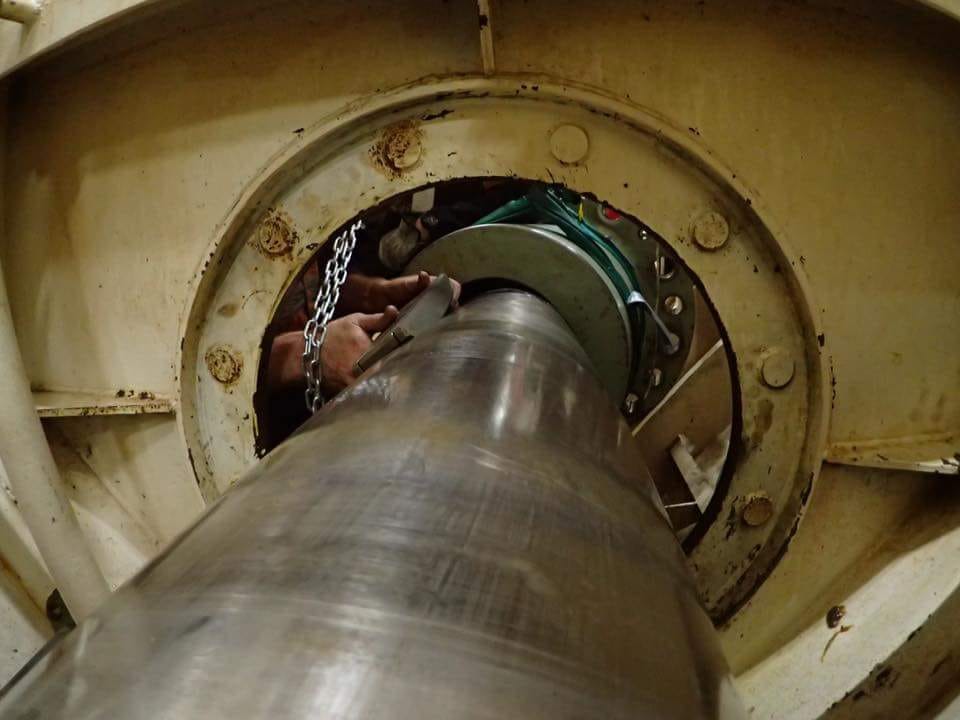
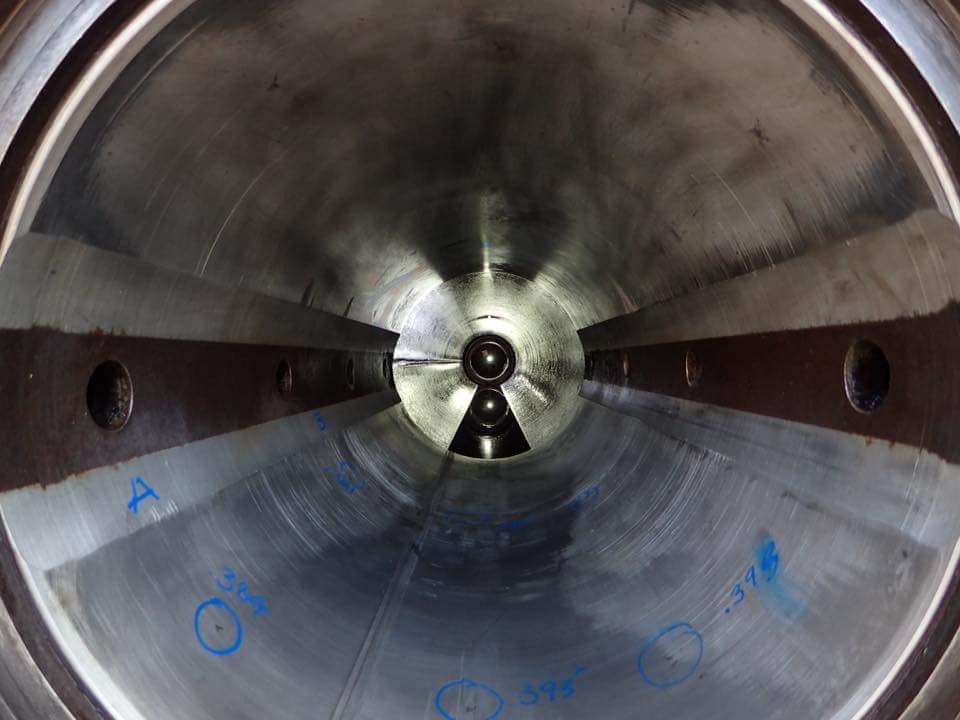
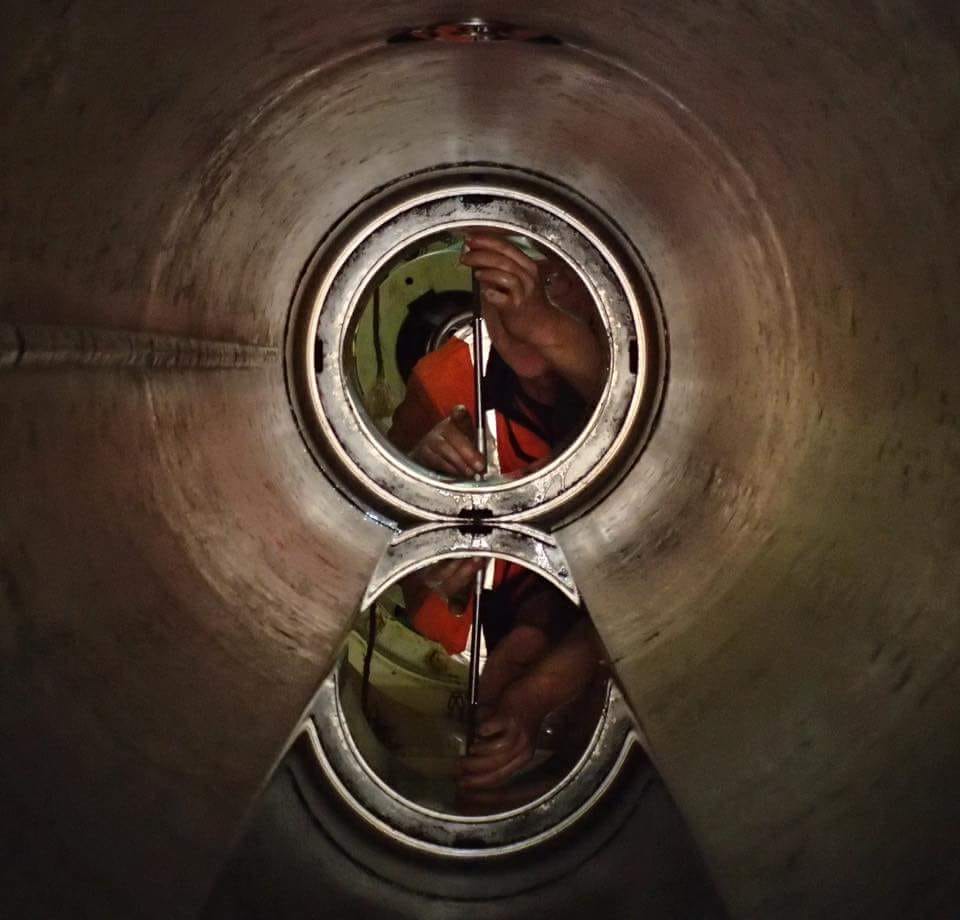
Collaroy's forward propellor shaft has passed through the stern tube, the internal seal and, finally, through the bulkhead seal to arrive at the point where fitters inside can begin the tricky job of recoupling it to it's drive systems. Here, they immediately begin fitting the first key back onto the shaft.
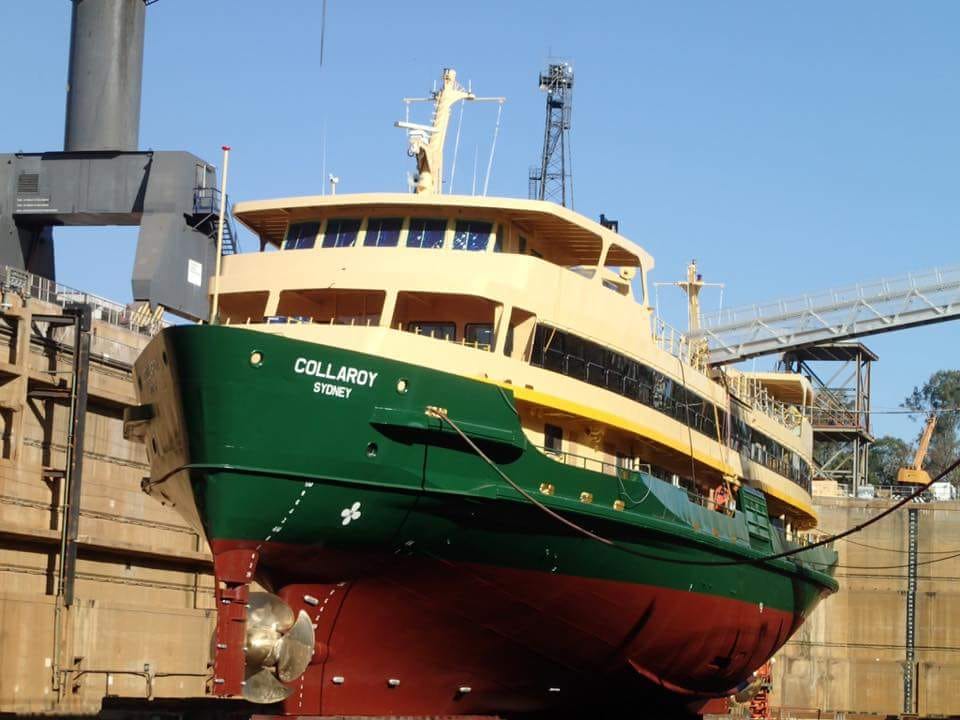
For Collaroy, hull painting is complete. Superstructure has a way to go so painting crews will finish passenger walkways and exterior bulkheads at Collaroy's home Shipyard in Mort Bay. 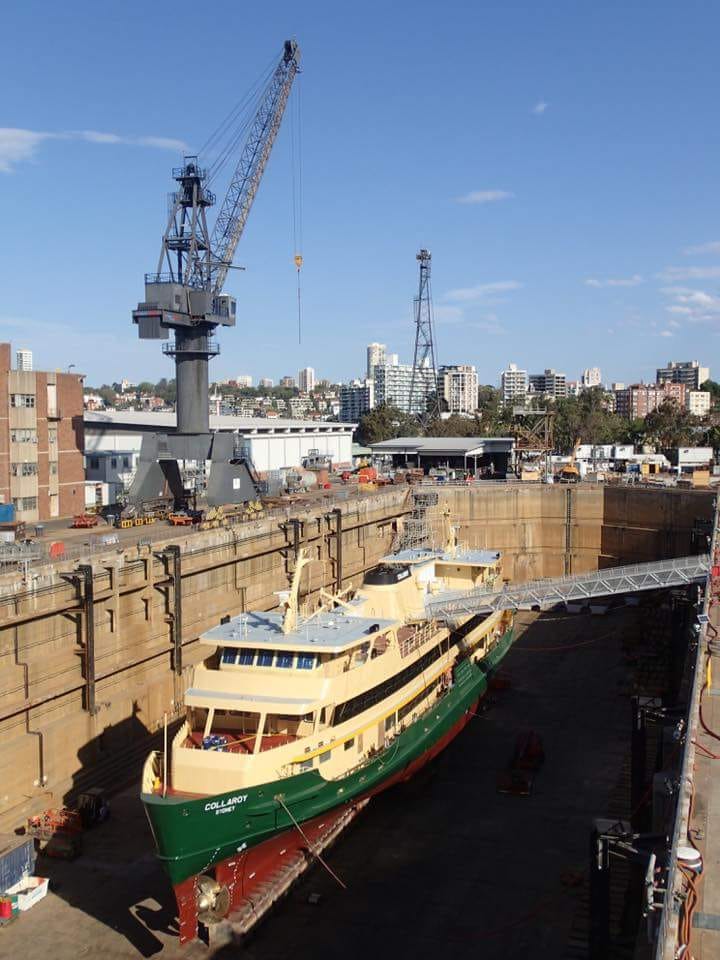
Collaroy, her last day on the blocks in The Captain Cook Graving Dock. 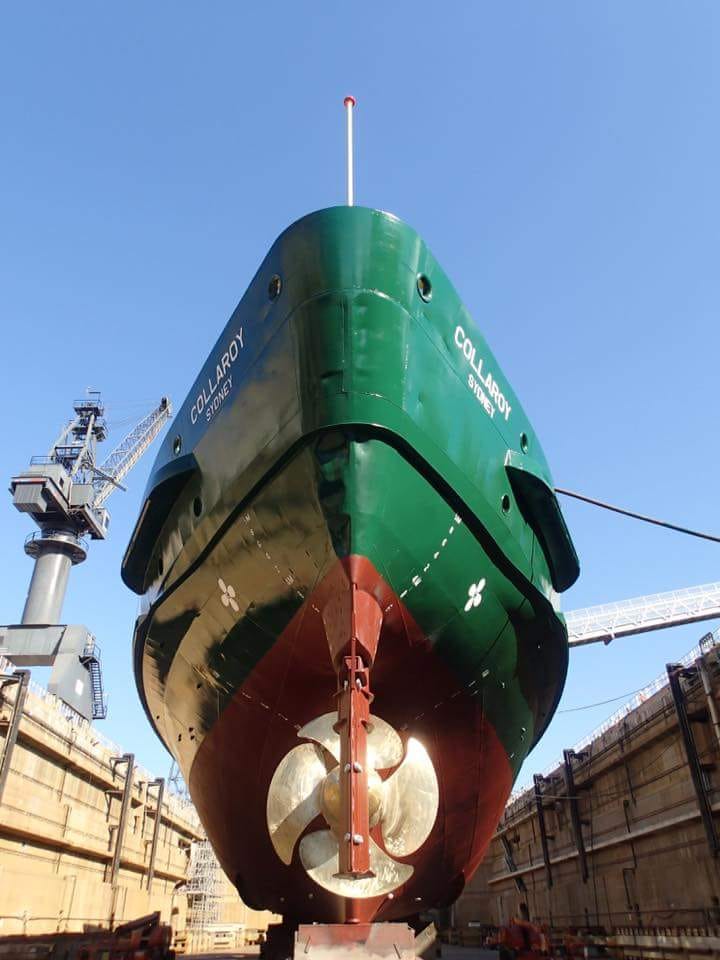
Collaroy's aft end and steering gear, in fresh colour. 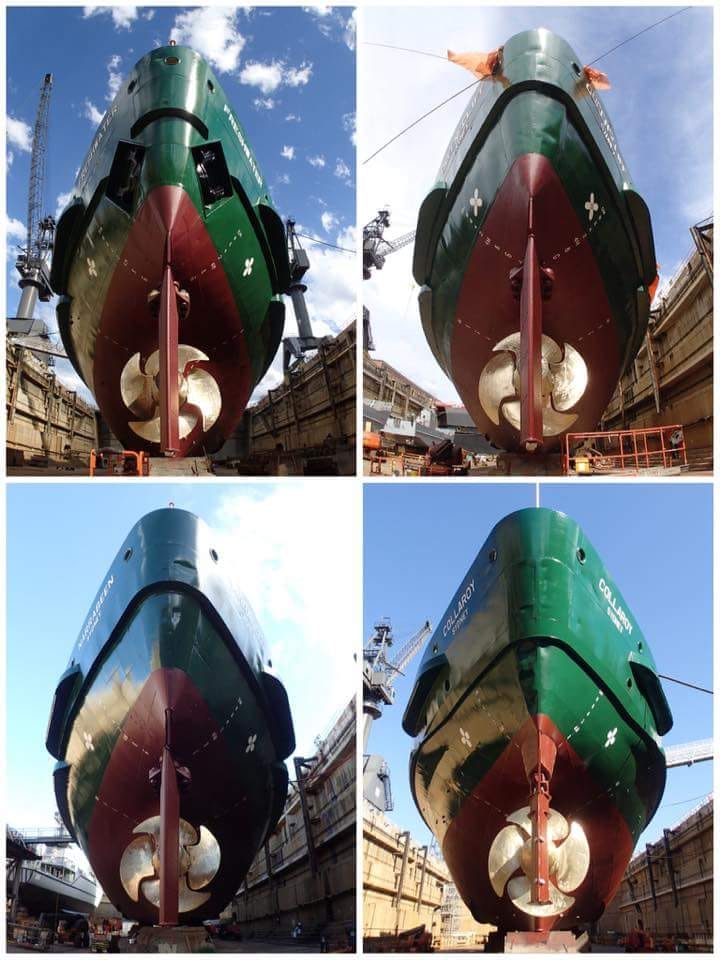
A quick comparison of all four vessels in the Freshwater Class at a similarly final stage of each of their dockings over the last four years at Garden Island. All are shown in aft view expect the Freshwater, shown at top left in forward view. Notice the differences in Collaroy's propellor blades and rudder.
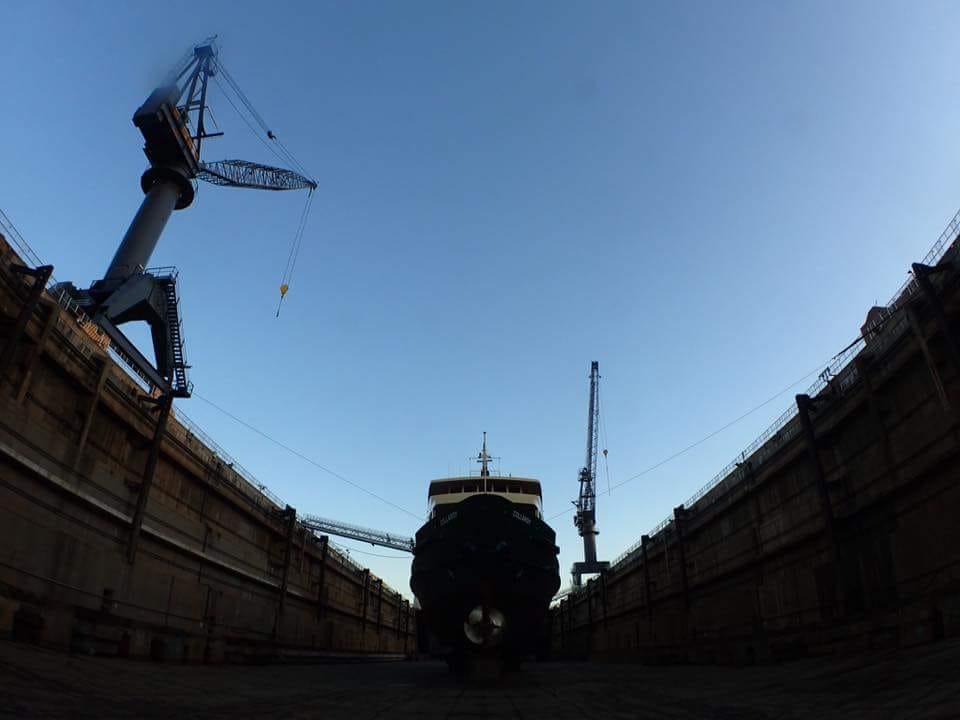
Collaroy's final hours on the blocks before the dock is flooded. Once afloat, she will be taken by a few harbour tugs to her home shipyard for nearly a month's worth of wrap up work before returning to service somewhere around her 30th birthday celebrations in mid-October.
-->> Go to Narrabeen 2017 Dry Docking Part 1
| |||||||||||||||||||||||||||||||||||||